What Global Enterprises Expect from Grade A Office Infrastructure in 2026
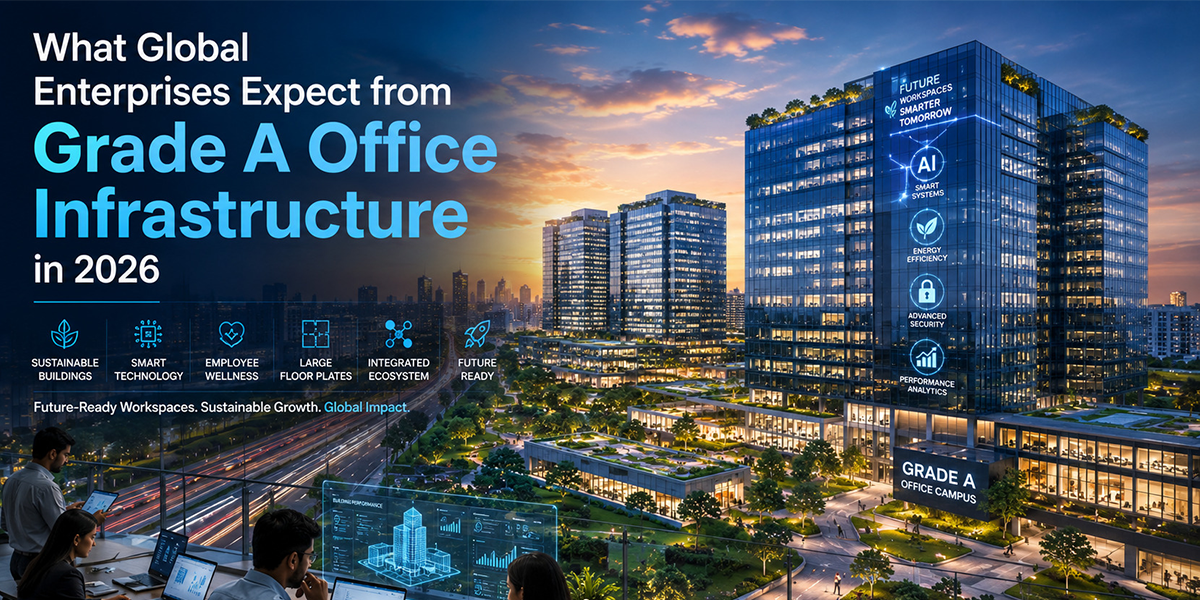
The global workplace is undergoing one of the most significant transformations in modern business history.
Office infrastructure is no longer viewed as a basic real estate requirement. For modern enterprises, workplaces have evolved into strategic business assets that directly influence:
As Global Capability Centers (GCCs), technology companies, consulting firms, financial institutions, and multinational enterprises continue expanding across India, expectations from commercial real estate are changing rapidly.
The definition of Grade A office infrastructure in 2026 is fundamentally different from what it was just a decade ago.
Today's global occupiers expect office environments that seamlessly combine:
The future workplace is no longer just about office space - it is about enabling enterprise growth.
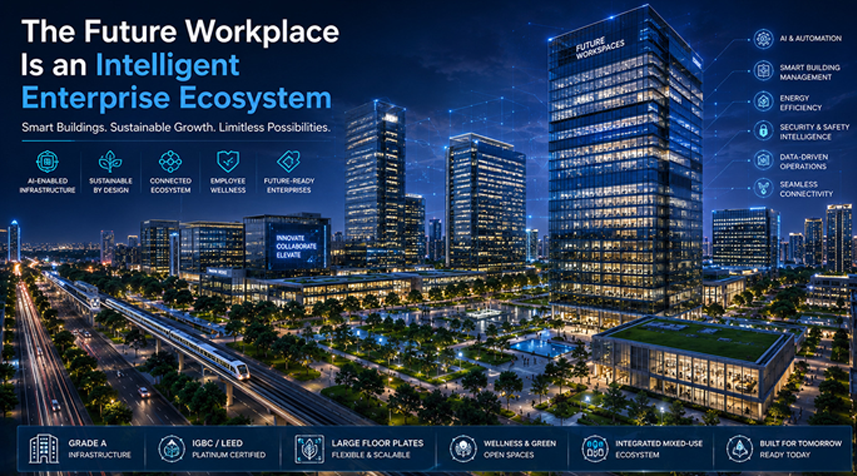
The Evolution of the Modern Workplace
Traditionally, office developments were evaluated primarily based on:
That approach has changed dramatically.
Modern enterprise occupiers now assess office environments through a much broader strategic lens.
Today's key workplace questions include:
These evolving priorities are shaping the next generation of commercial real estate across India.
Why Sustainability Has Become a Core Business Requirement
Sustainability is no longer considered an optional feature in commercial real estate. It has become a strategic requirement for global enterprises.
Many multinational organizations now operate under strict environmental targets and ESG frameworks that require:
This is why certifications such as IGBC Platinum and LEED are becoming increasingly important in Grade A office developments.
Modern enterprises now prefer office infrastructure that includes:
Sustainable infrastructure not only supports ESG commitments but also improves long-term operational efficiency and cost savings.
Employee Experience Is Becoming a Strategic Priority
The workplace is now directly connected to workforce productivity, employee engagement, and talent retention.
Following the global evolution in workplace culture, enterprises increasingly recognize that employees expect more than traditional office environments.
Modern workplaces are now expected to support:
As a result, Grade A office campuses are increasingly integrating:
The objective is no longer simply to provide office space. The objective is to create environments where people genuinely want to work.
Large Floor Plates Are Driving Operational Efficiency
One of the biggest priorities for GCCs and enterprise occupiers today is operational efficiency.
Large contiguous floor plates allow companies to:
This is especially important for:
As enterprise teams become larger and more integrated, demand for efficient large floor plate office infrastructure continues to rise.
Smart Infrastructure Is Defining Modern Commercial Buildings
Technology is now deeply integrated into workplace infrastructure.
Modern enterprises increasingly expect:
This transformation is turning commercial buildings into digitally enabled enterprise ecosystems.
For global occupiers, smart infrastructure improves:
The future workplace is no longer passive infrastructure. It is an active operational platform.
Integrated Campuses Are Replacing Standalone Office Towers
The future of commercial real estate is moving toward integrated ecosystems rather than isolated office towers.
Modern enterprises increasingly prefer developments that combine:
Integrated campuses create stronger workforce ecosystems while significantly improving employee convenience and engagement.
This "walk-to-work" and mixed-use model is becoming particularly relevant for younger workforces and global enterprises focused on workplace experience.
Across India, integrated business districts are rapidly emerging as the preferred format for next-generation commercial development.
Why Infrastructure Quality Impacts Enterprise Decisions
Infrastructure quality now directly influences:
Global occupiers increasingly evaluate technical infrastructure specifications before finalizing office locations.
Key evaluation factors now include:
As commercial real estate continues to mature, technical infrastructure is becoming a major differentiator between average office developments and institutional-grade enterprise environments.
Ahmedabad's Evolving Grade A Commercial Ecosystem
Ahmedabad's commercial real estate market is entering a new era of enterprise-focused growth.
The city is increasingly witnessing the emergence of:
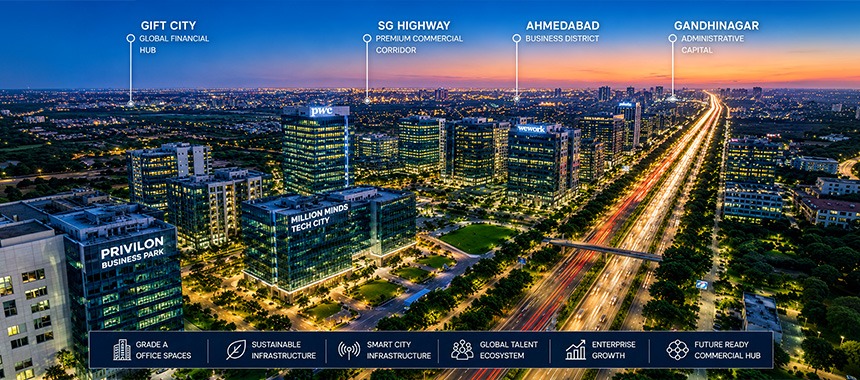
This transformation is particularly visible across SG Highway and the Ahmedabad-GIFT- Gandhinagar corridor, where several next-generation developments are reshaping the city's commercial landscape.
Projects such as Million Minds Tech City reflect this transition toward future-ready enterprise ecosystems designed for:
Features increasingly expected by enterprises include:
Ahmedabad is steadily aligning itself with the evolving expectations of modern global enterprises.
The Future of Grade A Office Infrastructure
The future of workplace infrastructure will be defined by developments that successfully combine:
Commercial real estate is no longer simply about leasing office space. It is about enabling long-term business growth.
As India strengthens its role in global enterprise operations, demand for intelligent, resilient, and integrated office ecosystems will continue to rise.
Cities and developments capable of delivering these experiences will shape the next generation of enterprise expansion in India.
The definition of Grade A office infrastructure is evolving rapidly.
Modern enterprises no longer evaluate workplaces based solely on location or rental economics. Instead, they evaluate complete ecosystems capable of supporting:
This transformation is reshaping India's commercial real estate landscape and accelerating demand for future-ready office infrastructure.
As enterprise expectations continue to evolve, sustainable, technology-enabled, and peoplecentric commercial ecosystems will become even more important in defining the workplaces of tomorrow.
Frequently Asked Questions
What is considered Grade A office space in 2026?
Grade A office space typically includes sustainable infrastructure, smart building systems, premium amenities, energy-efficient operations, large floor plates, advanced safety systems, and strong workplace connectivity.
Why do GCCs prefer integrated office campuses?
Integrated campuses improve employee experience, operational efficiency, collaboration, workforce wellness, and long-term scalability.
Why is sustainability important in office infrastructure?
Sustainability helps enterprises reduce operating costs, support ESG commitments, improve energy efficiency, and create healthier workplace environments.
What are large floor plates in commercial real estate?
Large floor plates allow enterprises to accommodate larger teams on a single floor, improving collaboration, operational efficiency, scalability, and workplace planning.